The Energy Quadrilemma: Ten Years of Germany’s Energy Transition in Numbers

Published
10/2026 by Team buildData
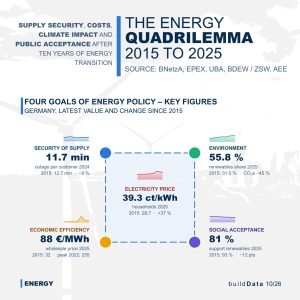
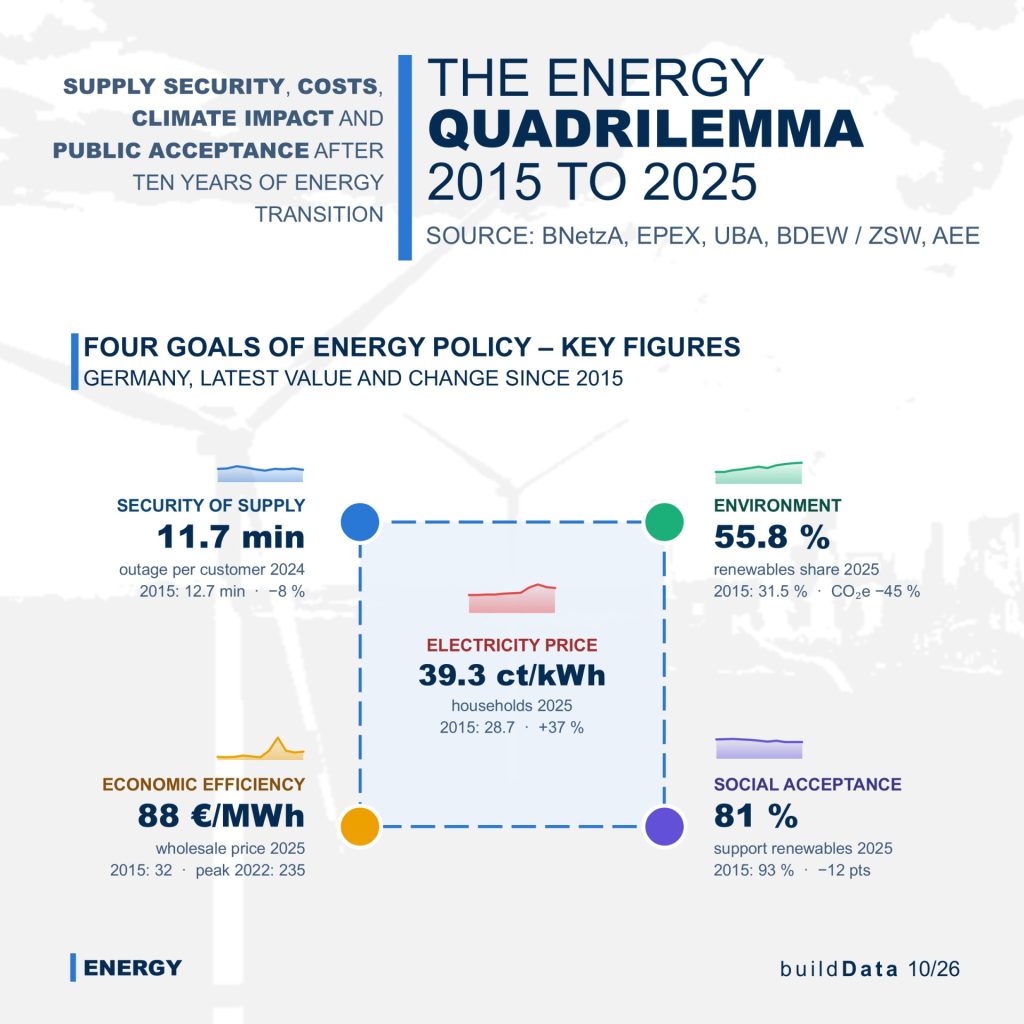
After ten years of the energy transition, the verdict is mixed: two of four goals are on track, two are under pressure. For decades, German energy policy was steered by a triangle of security of supply, economic efficiency and environmental compatibility. But since wind turbines and power lines have been going up on people’s doorsteps, one thing has become clear: nothing works without public acceptance. The triangle has become a quadrilateral. How did the four goals develop between 2015 and 2025? A look at the numbers.
Security of supply: stable at a world-class level
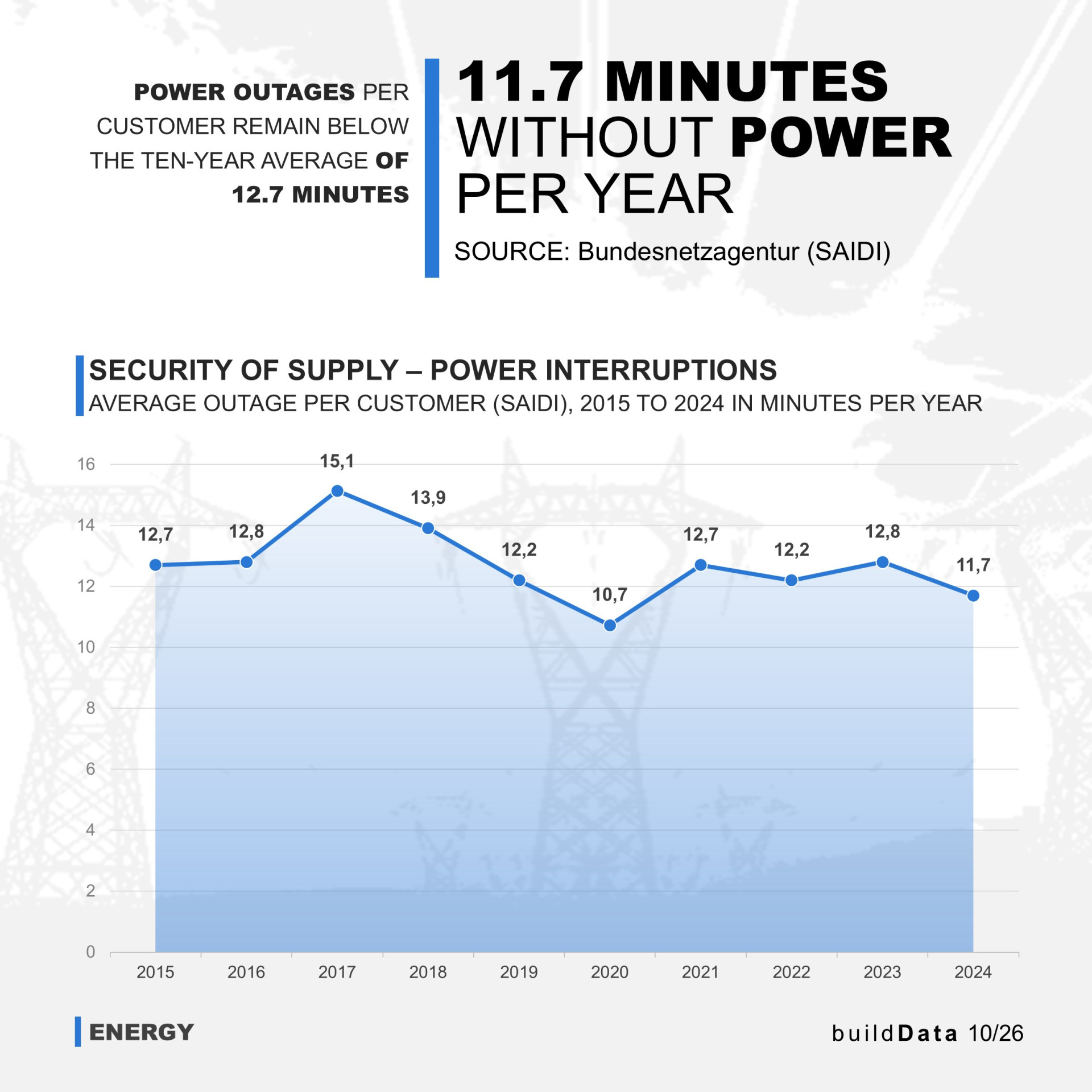
In 2024, the average electricity customer in Germany was without power for just 11.7 minutes, compared with 12.7 minutes in 2015. This is shown by the SAIDI index of the Federal Network Agency (Bundesnetzagentur), which records all interruptions lasting longer than three minutes. The German grid thus remains one of the most reliable in Europe.
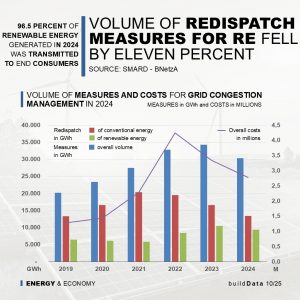
This is remarkable, because the system changed fundamentally during this period. The last nuclear power plants went offline in 2023, and coal plants are being retired step by step. At the same time, hundreds of thousands of solar systems and wind turbines feed in power depending on the weather. Fears that the energy transition would put supply at risk have not materialised so far. The price is paid elsewhere, however: in rising costs for grid expansion and grid interventions.
Economic efficiency: the price shock lingers
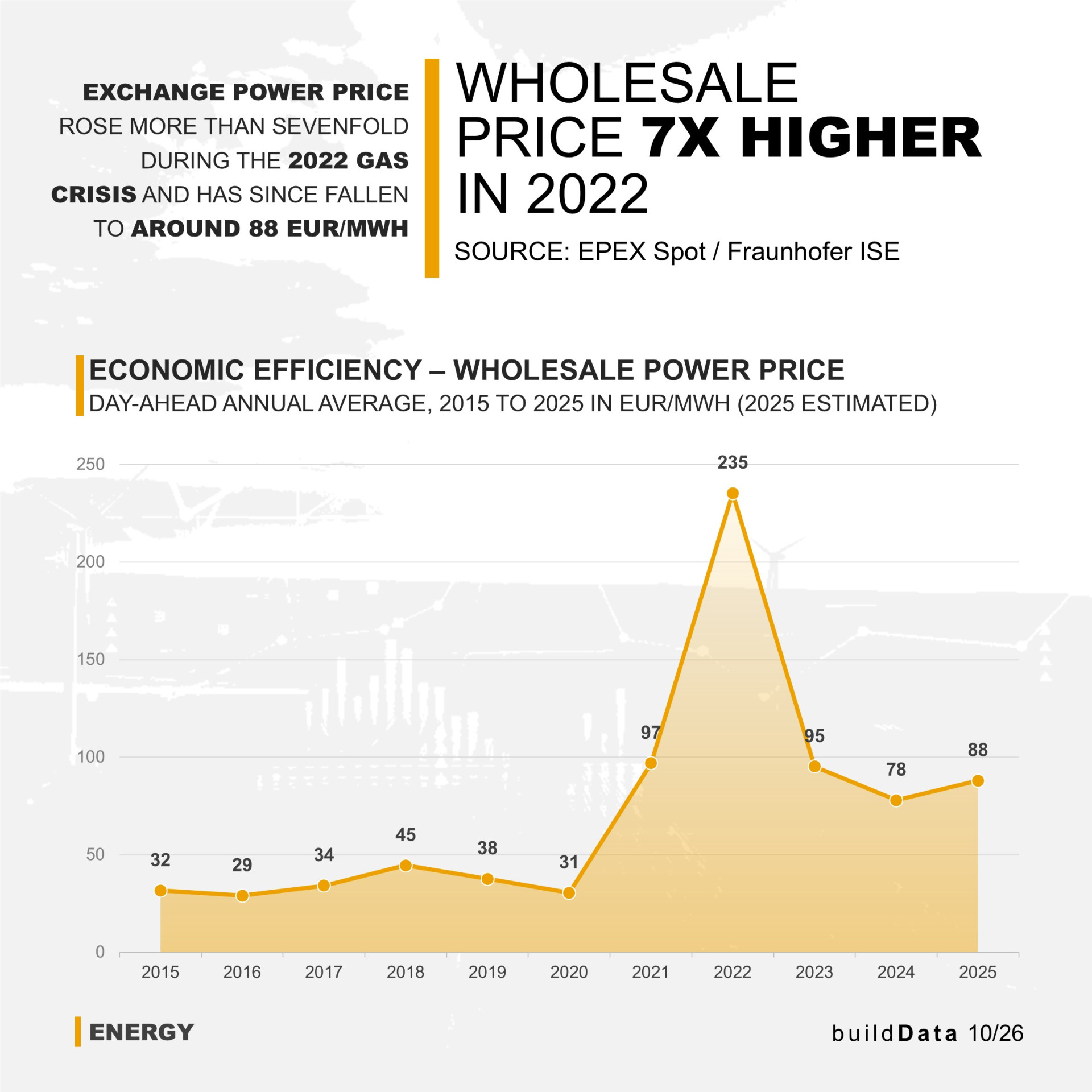
The wholesale electricity price averaged around 88 euros per megawatt hour in 2025, almost three times the 32 euros of 2015. In between lies the shock of the gas crisis: in 2022, the annual average reached 235 euros. Prices have fallen sharply since then, but rose again by 13 percent in 2025.
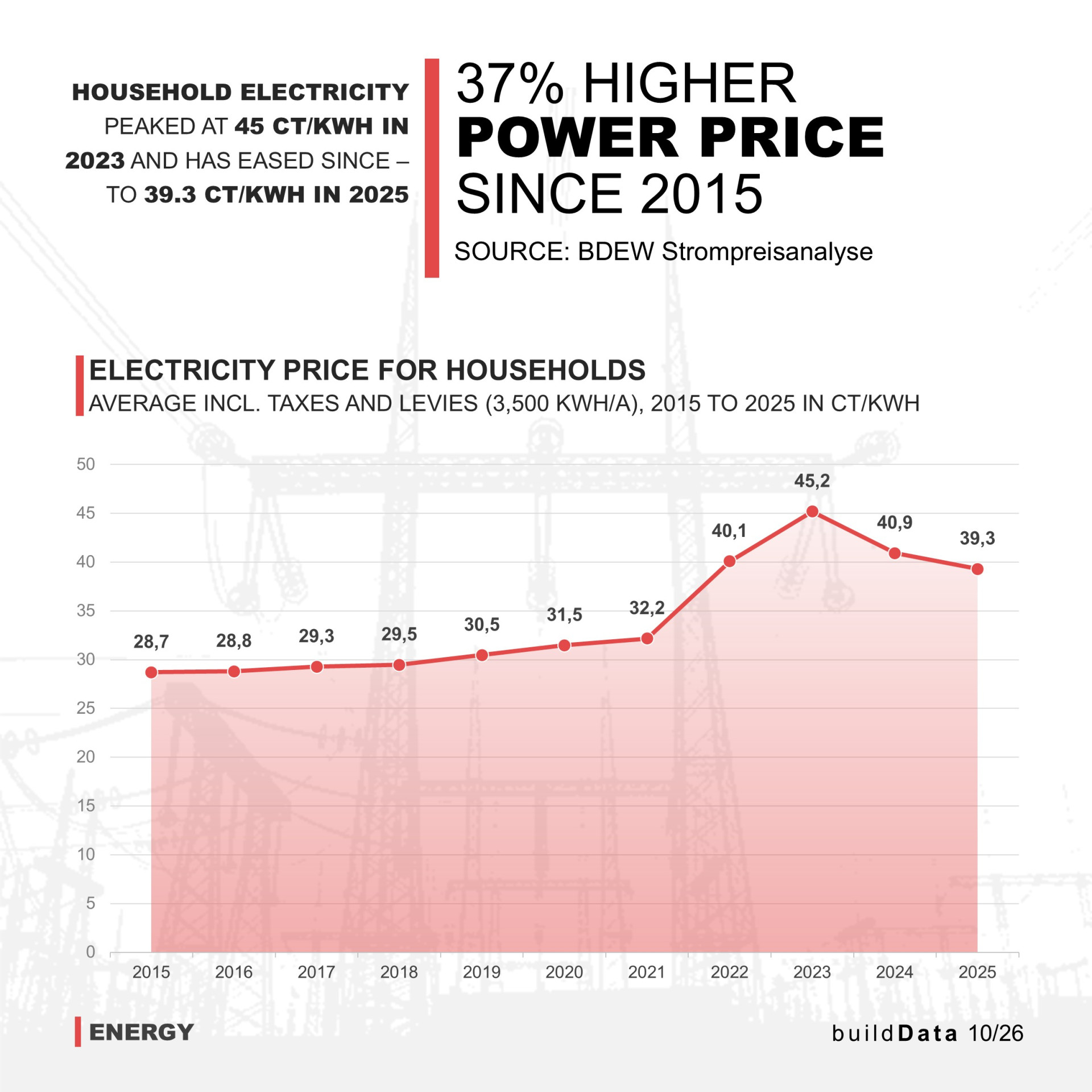
Households feel this in a dampened but noticeable way. In 2025, a kilowatt hour cost 39.3 cents on average, 37 percent more than in 2015. The price peaked in 2023 at around 45 cents. Besides procurement, grid fees are the main cost driver. In 2026, the price is falling slightly to around 37 cents, because the government is subsidising transmission grid fees. For industry and commerce, the electricity price remains a key location factor, especially in international competition.
Environmental compatibility: big strides, recent standstill
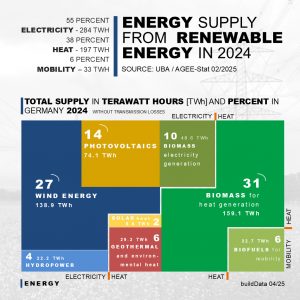
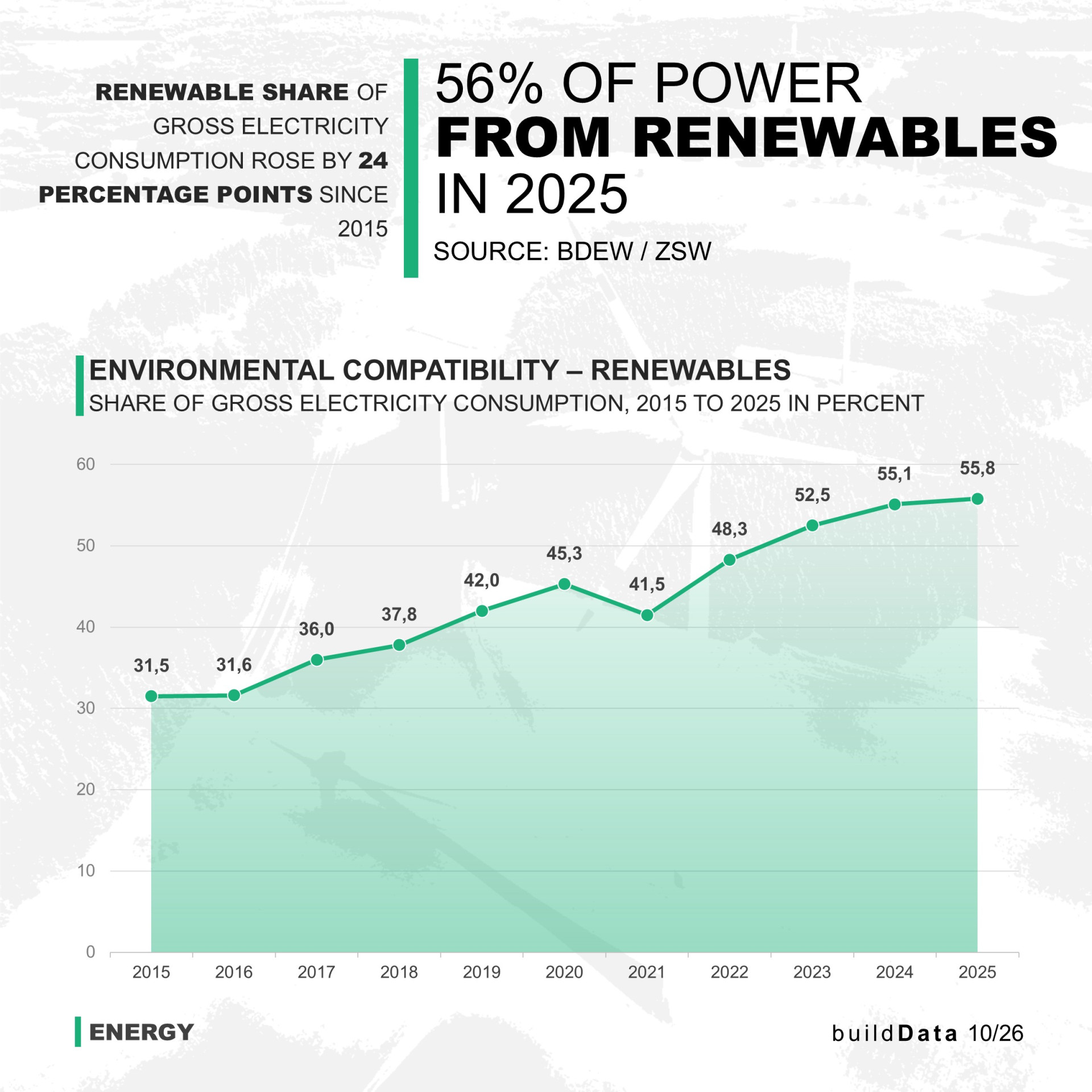
Renewable energies covered almost 56 percent of gross electricity consumption in 2025, up from 31.5 percent in 2015. Photovoltaics grew fastest: solar generation rose by almost a fifth in 2025 alone.
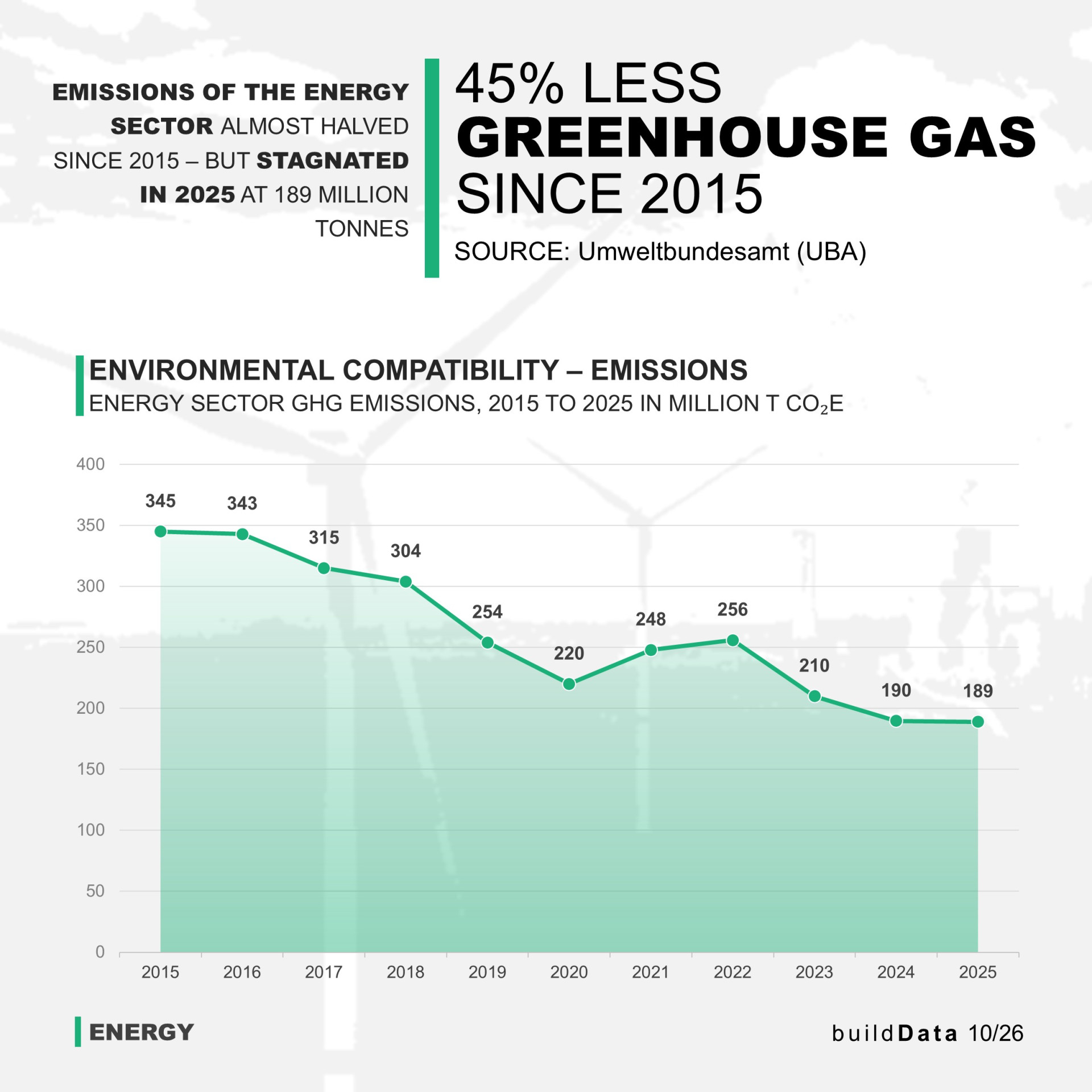
Greenhouse gas emissions from the energy sector fell accordingly. At around 189 million tonnes of CO₂ equivalent, they were about 45 percent below the 2015 level. No other sector has contributed as much to climate protection.
But momentum is fading. In 2025, emissions fell by only 0.3 percent, as a year with little wind forced gas-fired power plants onto the grid more often. The lesson: without storage and flexible consumers, the expansion of wind and solar reaches its limits. Grid expansion is also lagging behind the pace of new plants.
Social acceptance: the fourth goal
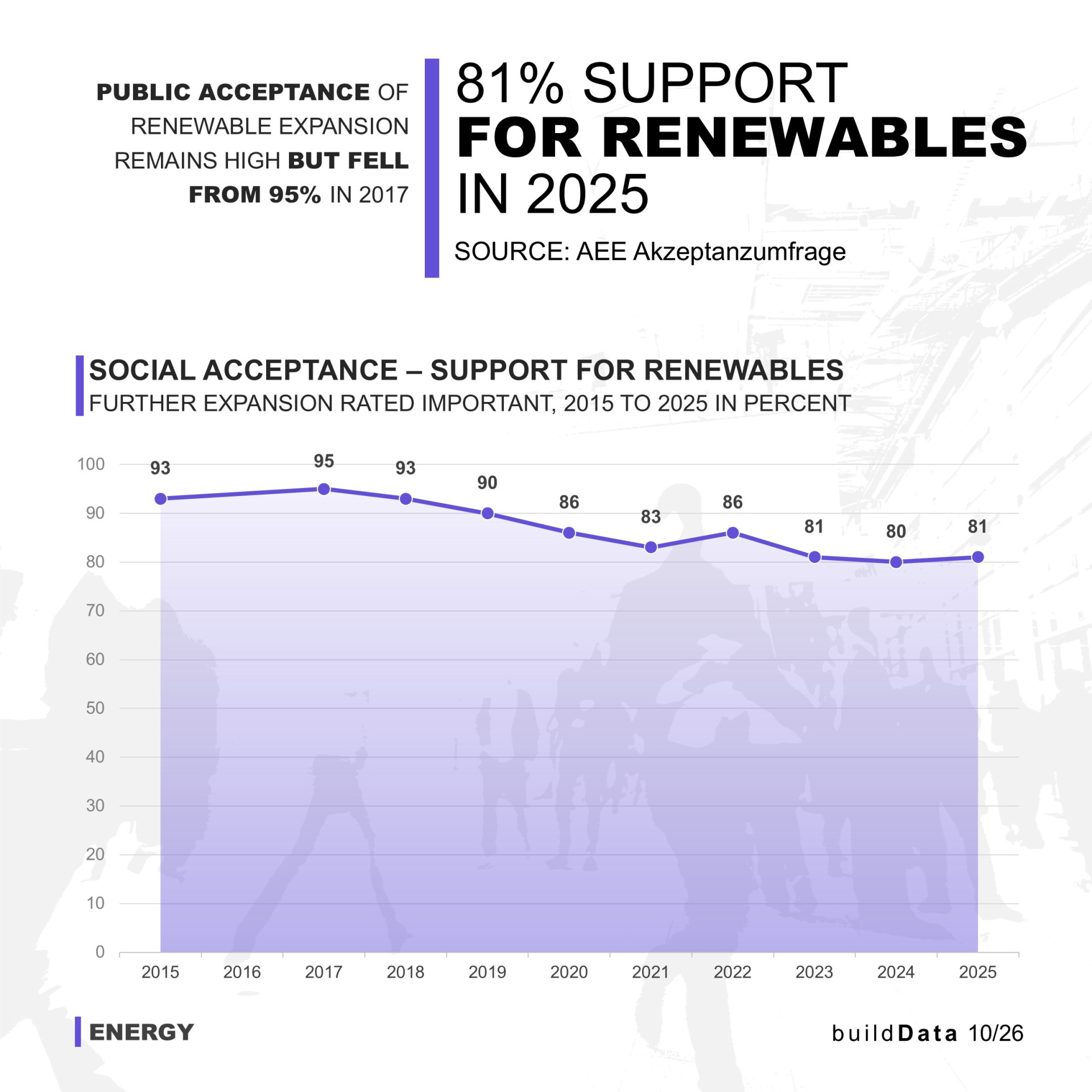
Around 81 percent of Germans consider the further expansion of renewable energies important. That is the result of the 2025 acceptance survey by the German Renewable Energies Agency (AEE). Support remains high but has declined noticeably: in 2017, it stood at 95 percent.
Why does acceptance belong alongside the classic goals? Because the energy transition is now visible everywhere: as a wind farm on the edge of the village, a new transmission line or a heat pump in the basement. The 2023 dispute over the Building Energy Act showed how quickly support can tip when people feel overwhelmed. Fair cost sharing, local participation and reliable policy are therefore not soft factors. They help decide whether projects get built at all.
Conclusion: progress with open flanks
Security of supply and climate protection have improved since 2015; costs and acceptance remain the open flanks. The next phase of the energy transition is less likely to fail on technology than on money and public backing. For the construction and real estate sector, this means that buildings are turning from consumers into part of the energy system, with photovoltaics, storage, heat pumps and smart charging. Self-generated solar power, for example, can cushion high grid fees and at the same time strengthen acceptance on site. Anyone who plans, builds or renovates is helping to shape the energy quadrilemma.
- Deutsches Stromnetz eines der zuverlässigsten im europäischen Vergleich
- Fraunhofer ISE: Energy-Charts
- Agora Energiewende (2026) - Stand der Dinge 2025
- BDEW-Strompreisanalyse Herbst 2026
- Erneuerbare Energien decken 2025 fast 56 Prozent des Stromverbrauchs
- Treibhausgas-Emissionen in Deutschland
- CO₂-Grafiken zu Strom und Wärme
- Akzeptanzumfrage 2025: Energiewende wird sichtbarer, Akzeptanz weiter hoch
- Hohe Zustimmung zur Energiewende