German Energy Mix, 1st to 3rd quarters of 2026

Published
10/2026 by Team buildData
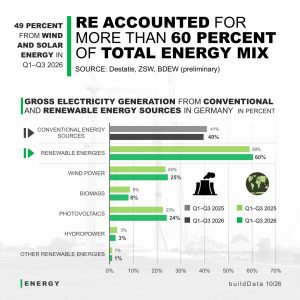
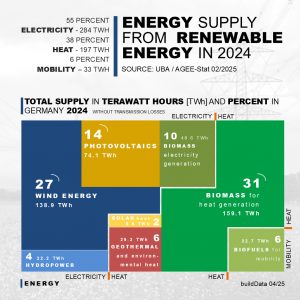
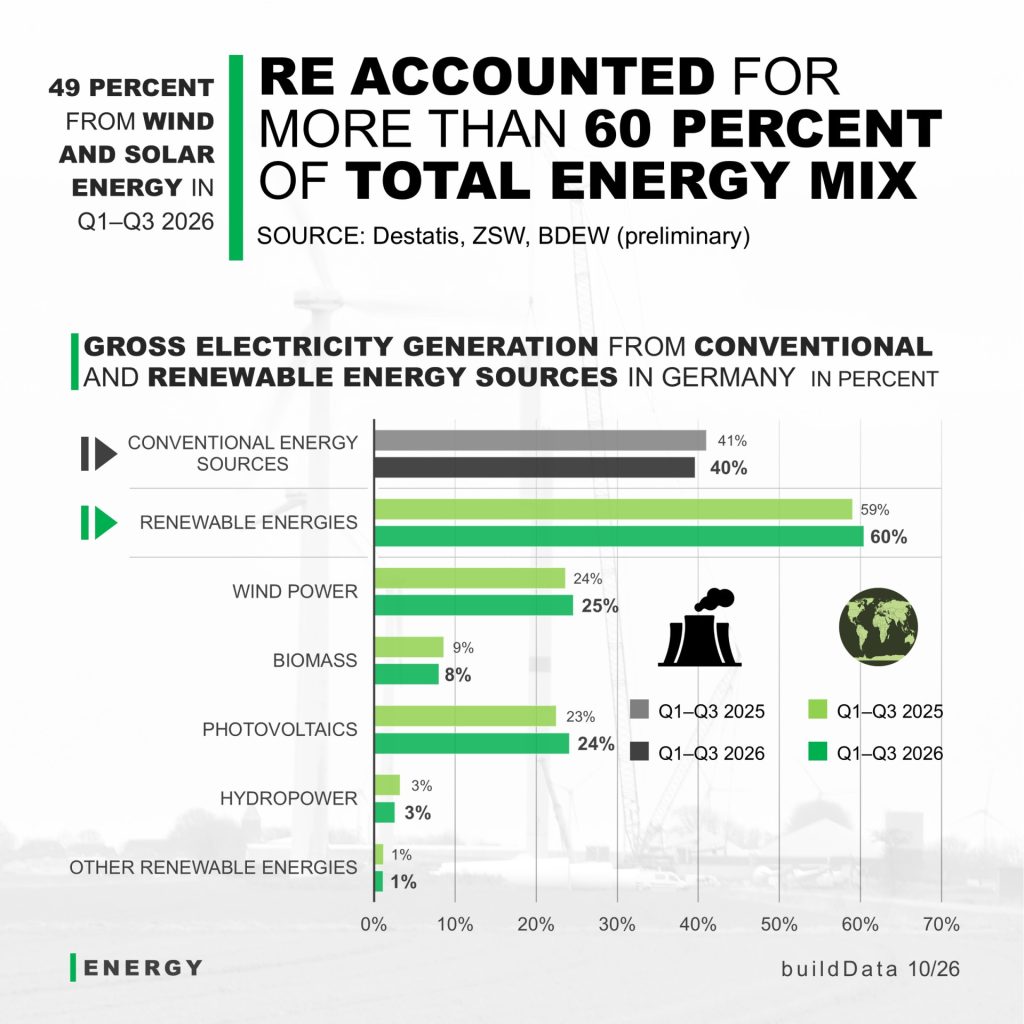
The results for the first three quarters of 2026 are once again positive for renewable energies. From January to September, they accounted for around 60.4 percent of Germany’s total gross electricity generation. Wind and solar power together already supply almost 49 percent of the electricity generated – with photovoltaics increasing its share from around 22 to 24 percent compared with the same period last year.
Renewable energies continue to gain ground in Germany's electricity generation. According to preliminary calculations by the Centre for Solar Energy and Hydrogen Research (ZSW) and the German Association of Energy and Water Industries (BDEW), they covered around 60.7 percent of gross electricity consumption in the first three quarters of 2026 – a new record and around 4 percentage points more than in the same period of the previous year (56.7 percent). Gross electricity generation from renewable sources rose by 8.7 percent to 237.5 billion kilowatt hours, while electricity consumption increased by 1.6 percent to 391.6 billion kilowatt hours.
Photovoltaics has now become the largest single source: at 94.7 billion kilowatt hours (+13.9 percent), it contributed around 24 percent of electricity generation. Onshore wind generated 76.2 billion kilowatt hours (+9.1 percent) and offshore wind 20.8 billion kilowatt hours (+19.8 percent) – together also just under 25 percent. In addition to the continued expansion of capacity, more favourable wind conditions contributed to the increase. By contrast, biomass declined (−2.1 percent), and hydropower in particular fell by 14.3 percent due to lower rainfall. The trend continues in terms of new capacity: by the end of September, around 11.8 gigawatts of photovoltaics, 3.5 gigawatts of onshore wind and 1.3 gigawatts of offshore wind had been newly connected to the grid.
Although Germany's electricity mix is now predominantly renewable, it still cannot do without fossil fuels such as coal and gas. Their gross electricity generation even rose slightly in the first nine months, from 151.7 to 156.1 billion kilowatt hours; however, as total generation grew by 6.3 percent to 393.6 billion kilowatt hours, their share fell from around 41 to just under 40 percent. The half-year figures from the Federal Statistical Office (Destatis) show the shifts in detail: in the first half of 2026, grid feed-in from coal fell slightly by 0.5 percent (share: 21.4 percent), while natural gas rose by 6.4 percent (16.5 percent). At the same time, Germany exported significantly more electricity (+14.9 percent), leaving little of the previous year's import surplus. Destatis is expected to publish its detailed analysis for the third quarter of 2026 in December.
Despite the progress made in expanding renewable energies, Germany continues to fall short of its potential. Once again, grid expansion is quickly identified as the bottleneck – particularly at distribution grid level. The industry is therefore calling for a swift agreement on the amendment of the Renewable Energy Sources Act (EEG) and an acceleration package for distribution grids with simpler permitting and environmental assessment procedures. In addition, competition for grid connections is growing: industry, battery storage systems and heat pumps are all seeking access to the grid at the same time.
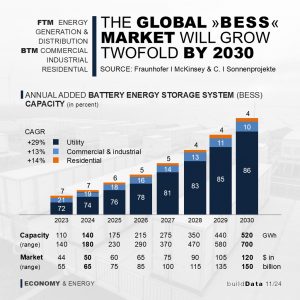
Storage capacity is also urgently needed to ensure grid stability. Wind and solar are volatile and, by their very nature, are not constantly available. With an increasing number of hot days and tropical nights, demand for cooling is also rising in summer – precisely when photovoltaics delivers its peaks. Decentralised photovoltaics combined with battery storage can make an important contribution here; for seasonal balancing between summer and winter, long-term storage such as green hydrogen is coming into focus.
Overall, the results for the first three quarters of 2026 show that the energy transition in the power sector is making progress and that photovoltaics has become a key pillar. Whether this pace can be maintained, however, depends less on the expansion of generation capacity than on grids, storage and a reliable political framework.